Let’s say you’re in a group chat. One person shares an update, and everyone in the group instantly sees it. Now, imagine you could choose to only receive updates that match your interests—like only getting movie night plans but ignoring birthday reminders. That’s pretty much how the Publish-Subscribe (Pub/Sub) model works in tech.
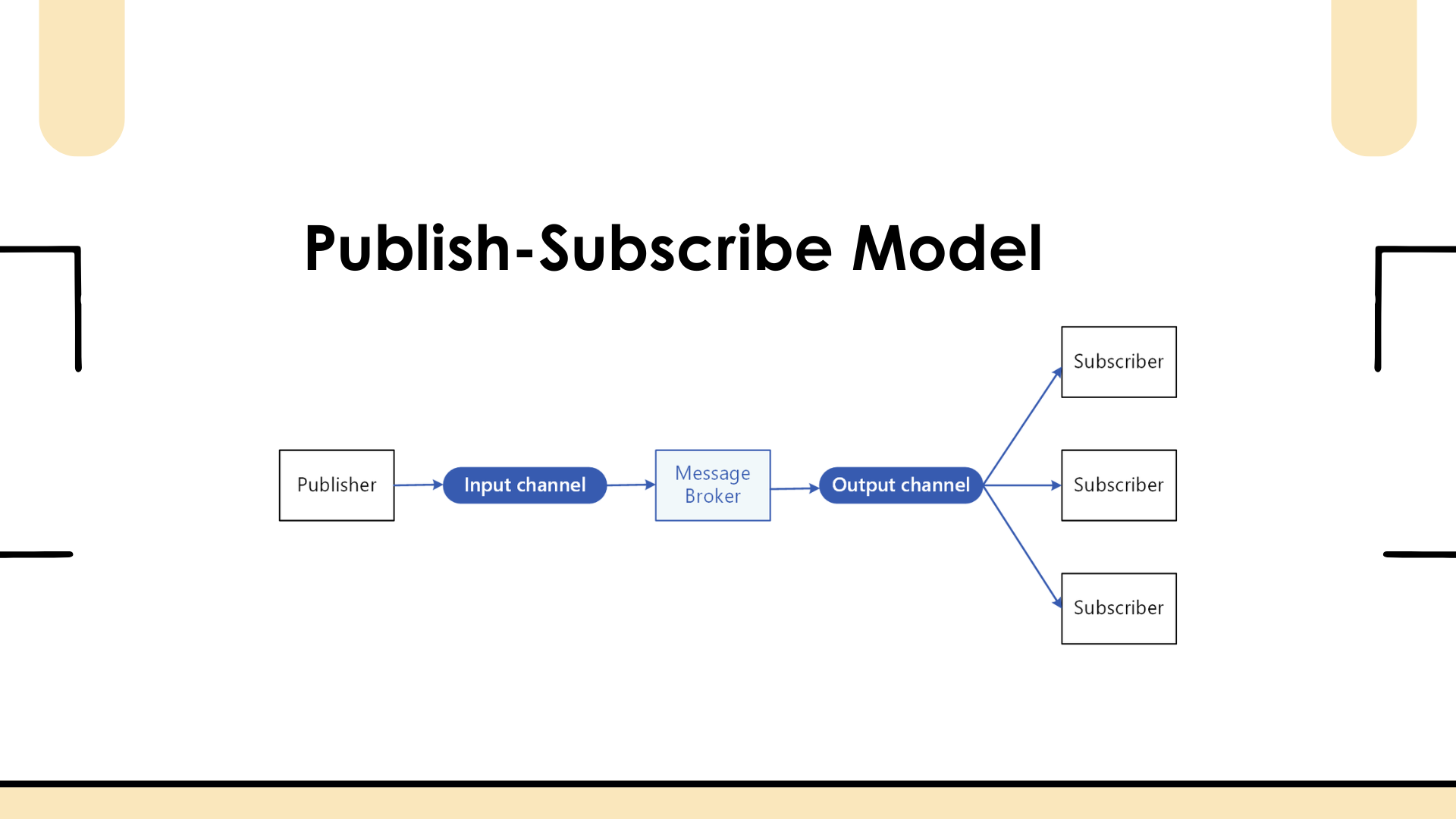
This model is a messaging pattern where senders (publishers) don’t send messages directly to receivers. Instead, they publish messages to a channel or a topic, and anyone interested in that topic can subscribe to receive those messages. The best part? Publishers and subscribers don’t even know each other exist.
The Core Components
- Publisher
This is the sender of the message. It sends messages to a topic or a channel, without worrying who receives them. - Subscriber
These are the listeners. They register interest in a particular topic and receive messages whenever something new is published to it. - Broker
The real star of the show. This is the messaging system or service that sits in the middle, routing messages from publishers to all interested subscribers. Think of it like a postal service that reads the address (topic) and delivers messages accordingly.
A Real-World Analogy
Imagine subscribing to a YouTube channel. The channel uploads a new video (publishes), and you, being a subscriber, get notified immediately. The YouTube platform acts as the broker here—handling subscriptions and delivering content.
How It Works
Here’s a basic flow:
Publisher → Broker → [Topic] → Subscriber(s)
Let’s say a weather app publishes updates to a topic called weather_updates. Anyone who subscribes to weather_updates—say, other apps, dashboards, or users—will instantly get that data when it's published.
This decoupling makes the system scalable, flexible, and resilient. The publisher doesn't care if one or a hundred subscribers are listening. And subscribers don’t worry about who’s sending the data—they just receive it.
Use Cases
- Event-driven architectures: Services react to events like “user signed up” or “order shipped.”
- Live updates: Sports scores, stock tickers, or social media feeds.
- Logging and monitoring: Send logs from apps to multiple tools at once.
- Microservices communication: One service publishes, and many others react accordingly without tight coupling.
Synchronous vs. Asynchronous Pub/Sub
Most Pub/Sub systems are asynchronous, meaning publishers can send data without waiting for subscribers to respond. This leads to faster systems and better user experiences.
Popular Tools That Use Pub/Sub
- Apache Kafka – Designed for high-throughput, distributed messaging.
- Redis Pub/Sub – Simple and lightweight, great for in-memory messaging.
- Google Cloud Pub/Sub – A fully managed service for large-scale event ingestion.
- RabbitMQ – A message broker that supports many messaging patterns including Pub/Sub.
Why It’s Powerful
- Loose coupling: Publishers and subscribers don’t depend on each other.
- Scalability: Easy to add more subscribers without changing the publisher.
- Flexibility: Supports multiple use cases across different industries.
- Resilience: If one subscriber fails, others still get the message.
Final Thoughts
The Publish-Subscribe model is like an invisible handshake between services. It’s behind the scenes in chat apps, live scoreboards, analytics dashboards, and so much more. As systems grow and get more complex, Pub/Sub becomes one of the go-to patterns to keep things loosely coupled yet tightly coordinated.
It's not just a messaging pattern—it's the glue that keeps modern, distributed systems running smoothly.