When people talk about AI, they usually jump straight to the model GPT, LLaMA, or whatever the latest release is. But here’s the thing: models are only as smart as the data you feed them.
Think of it this way: if you and I had to answer questions about history, but all we had was a messy, unorganised pile of books in a basement, how fast would we be? Not very. AI has the same problem. It needs data that’s not only rich but also structured in a way it can actually use.
That’s where vector databases enter the picture.
What’s a vector anyway?
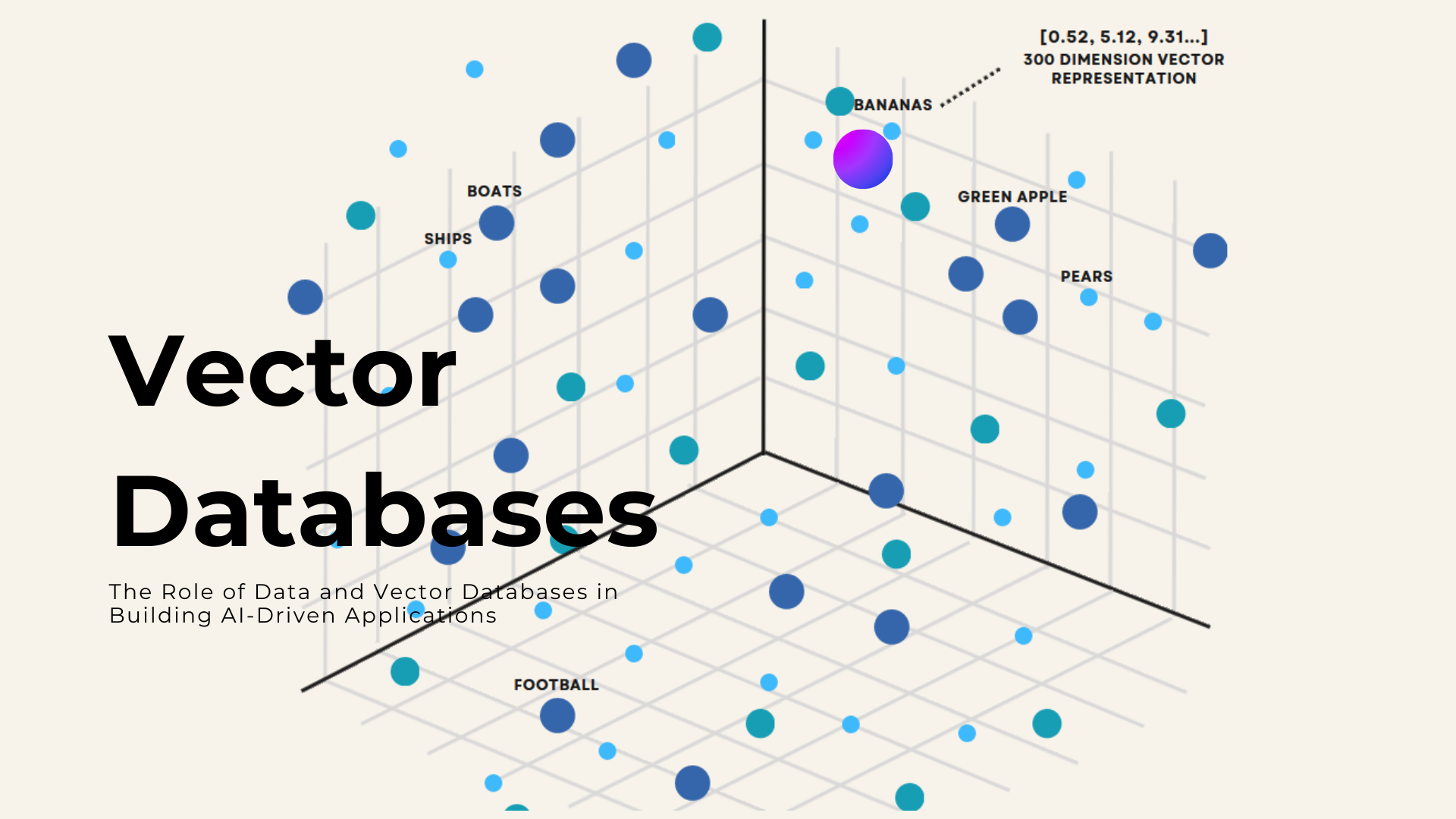
At first, the word vector might sound like high school math trauma. But here it’s simpler: a vector is just a list of numbers that represent something a sentence, an image, even a sound clip.
For example, “dog” and “puppy” might end up with vectors that are close together, while “dog” and “airplane” land far apart. This is how AI “remembers” meaning.
Why not just use a normal database?
You could throw your data in MySQL or MongoDB, but those systems are great at exact matches, not similarity.
Imagine you type into an AI assistant:
“Show me all desks under ₹20,000 that can adjust height.”
A normal database would look for rows that literally match that text. A vector database, on the other hand, converts your query into a vector, compares it with product vectors, and says: “Hey, these products are semantically similar, even if they don’t have the exact words you typed.”
That’s the magic: semantic search instead of keyword search.
Why does this matter for AI apps?
Almost every modern AI-driven app chatbots, recommendation engines, copilots relies on some form of retrieval. The AI needs to pull the right chunk of data before it can answer you.
- Want your chatbot to answer customer questions using your company’s FAQ? Store those FAQs in a vector DB.
- Building an AI that suggests the best outfit for your style? Store clothing attributes and customer behavior in vectors.
- Need fast, relevant product searches? Vectors again.
Without that retrieval step, even the smartest model ends up hallucinating.
Real-world tools
Some names you’ll hear a lot in this space are Pinecone, Weaviate, Milvus, and Qdrant. They’re built specifically for storing and searching vectors efficiently.
And here’s the kicker: you don’t always need to use them directly. Many frameworks (LangChain, LlamaIndex, etc.) integrate them under the hood, so you just describe what you want, and the framework talks to the database for you.
Conclusion
At the end of the day, AI isn’t just about clever models. It’s about connecting those models with the right data fast, relevant, and organised. Vector databases make that possible.