Every time you open a browser, watch a YouTube video, or send a message, you're relying on a complex set of communication rules beneath the surface. At the heart of it all lies the TCP/IP model—a framework that makes the internet work. But what exactly is it, and why should you care?
Let’s break it down.
What is the TCP/IP Model?
TCP/IP stands for Transmission Control Protocol/Internet Protocol. It’s not just one protocol—it's a suite of them, working together to help computers communicate over networks. The model is like a blueprint that guides how data is packaged, transmitted, and received across the internet.
Originally developed by the U.S. Department of Defense, TCP/IP became the foundation of the modern internet. It’s a more practical cousin to the theoretical OSI model, and it’s what real-world networks actually use today.
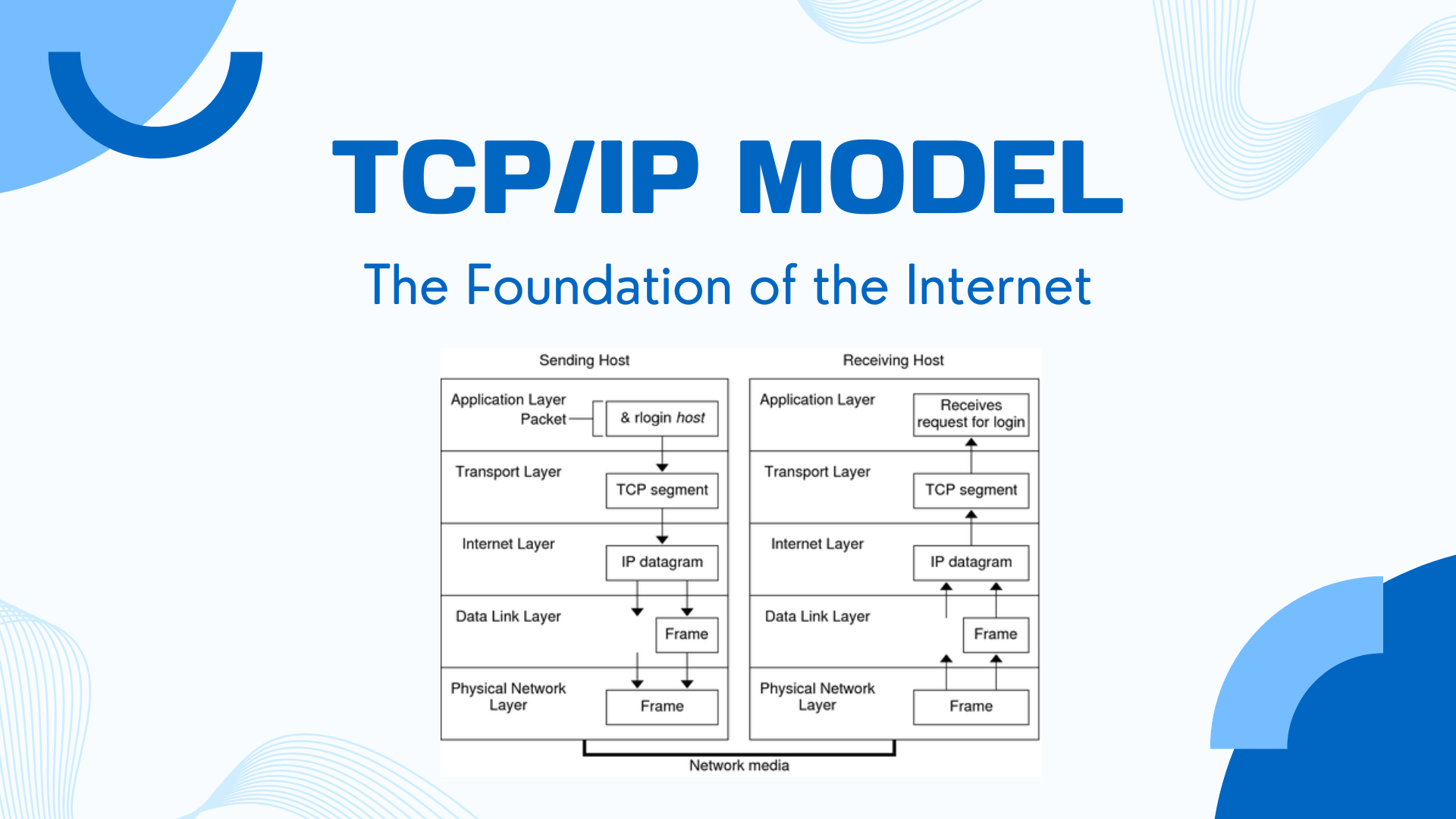
The 4 Layers of TCP/IP
Unlike the OSI model’s 7 layers, TCP/IP has just 4 layers, and each one plays a specific role.
- Application Layer
This is where user-facing applications live—think browsers, email clients, or video streaming apps. Protocols like HTTP, FTP, and DNS operate here. It’s the layer that interacts with software and prepares data to be sent over the network. - Transport Layer
Here’s where TCP and UDP come into play. The transport layer makes sure data gets from point A to point B accurately. TCP handles things like breaking data into packets, reassembling them, and ensuring nothing gets lost. UDP, on the other hand, is faster but doesn’t guarantee delivery—great for things like live video or gaming. - Internet Layer
This layer is all about routing. It decides the best path for the data to travel across the network. The main protocol here is IP, which gives every device an address (your IP address) and makes sure packets go to the right place. - Network Access Layer
Also called the Link Layer, this deals with physical transmission—like Ethernet cables or Wi-Fi. It handles the nuts and bolts of how bits are transmitted over hardware.
Why the TCP/IP Model Matters
Think of TCP/IP as the silent backbone of digital communication. It ensures that when you type in a URL, the request goes out properly, reaches the right server, and brings back the website—all without you even noticing. It abstracts away complexity and standardises how devices talk to each other.
Without it, the internet as we know it wouldn't exist.
In Summary
The TCP/IP model is a simple yet powerful framework that underpins all online communication. It breaks down networking into four understandable layers, each with a clear responsibility. By understanding it, you’re not just learning theory—you’re gaining insight into how modern systems are built and how data flows in the real world.
Whether you're debugging a web app or just curious about how a message reaches your phone, knowing the TCP/IP model gives you a solid foundation.