
GPT 5.6 and the Economics of Intelligence
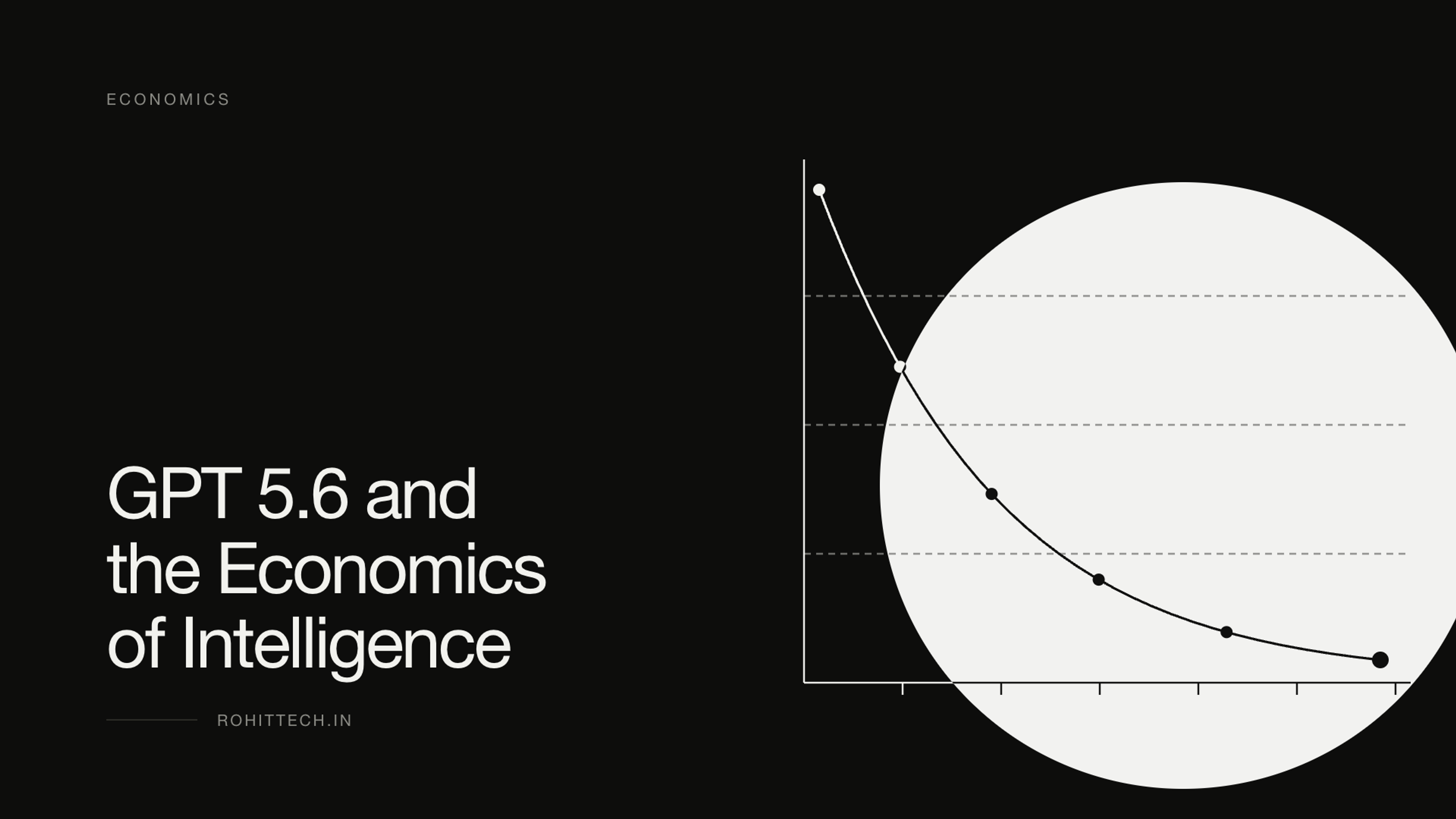
OpenAI's July 9 release of the GPT 5.6 model family.
The AI industry has spent a considerable amount of time competing on model intelligence.Better reasoning, stronger coding performance and larger context windows have become familiar parts of every new release.But there is another metric that matters just as much: the cost of getting useful work done.
In July, OpenAI introduced GPT 5.6, a family of models consisting of Sol, Terra and Luna. The models were positioned around different levels of capability and efficiency, giving developers more flexibility when choosing what to use.
This is an important direction for application developers because not every request needs the most capable model available.
Intelligence Has a Cost
Consider an application that uses AI to process incoming customer messages.Some messages might require a simple classification. Others might need a short response. A smaller percentage might require deeper reasoning or access to external tools.Using the same expensive model for every request is often unnecessary.A classification task does not necessarily require the same computational resources as analysing a large codebase.This is where model selection becomes an engineering decision.
Developers need to think about task complexity, response quality, latency, token consumption and the cost of retries.
Why Model Routing Matters
One approach is to introduce a routing layer between the application and the model provider.The routing layer evaluates the incoming request and decides which model should handle it.
For example, a simple yes or no classification could be handled by a smaller model. A complicated customer support issue could be routed to a more capable model.
The application can also use fallback logic when the initial model produces an invalid response or fails to meet a confidence threshold.This creates a more flexible architecture.However, routing itself introduces complexity. Developers need to measure whether the cheaper model is actually producing acceptable results and whether the additional routing logic is worth maintaining.
The Importance of Evaluating Cost Per Successful Task
Looking only at the price per million tokens can be misleading.A cheaper model might produce an incorrect response more frequently. If the application needs multiple retries or additional validation, the overall cost could become higher.
A more useful metric is the cost of completing a task successfully.
For example, imagine two models processing 1,000 requests.
The first model costs less per request but requires frequent retries. The second costs more initially but completes most requests correctly.The second model might be cheaper when the entire workflow is considered.This is why evaluation needs to happen at the application level rather than relying entirely on model benchmarks.
Building AI Products With Economics in Mind
I have become increasingly interested in this part of AI engineering because building a product with AI is not just about connecting an API and getting a response.It is about deciding where intelligence is actually needed.This also connects to the idea of using simpler classification approaches where possible instead of invoking complex agents for every small decision.As models become more capable, developers will have more choices. The challenge will be knowing which capability is appropriate for a particular task.
I think the next phase of AI product development will reward engineers who understand both model capabilities and application economics.
The best model is not necessarily the most expensive or the most intelligent one.It is the one that solves the problem reliably at the right cost.