
Coding Agents Are Starting to Think in Parallel
AI coding tools have evolved quickly.
Initially, they helped developers complete lines of code. Then they started generating functions, editing multiple files and assisting with debugging.Now, the direction is moving towards agents that can coordinate multiple tasks.Meta introduced Muse Code in August, a terminal based coding agent powered by Muse Spark 1.2.
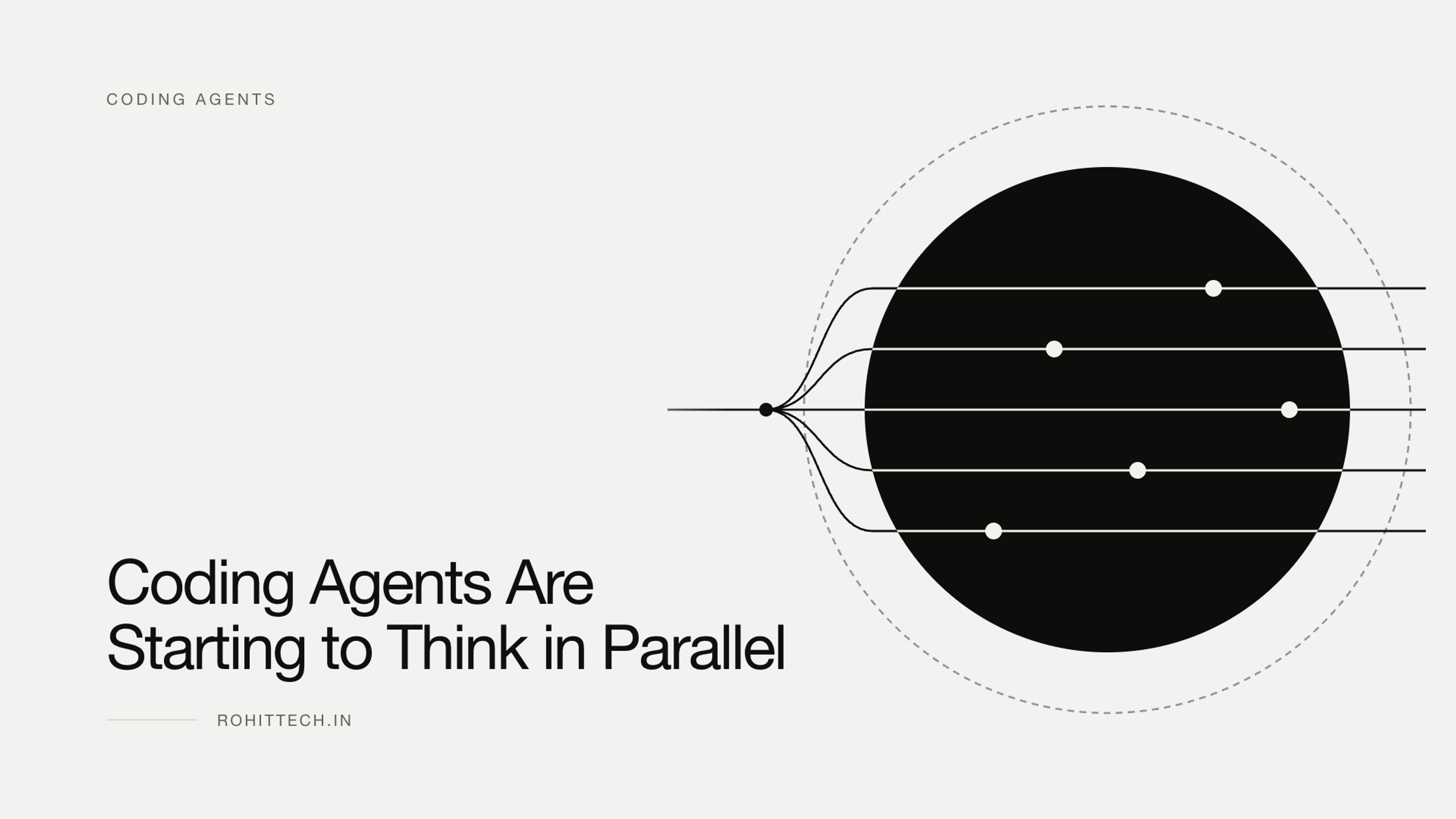
One of its interesting capabilities is the use of persistent background subagents. Instead of relying on a single agent to handle every part of a complex task, the system can coordinate specialised agents that remain active throughout a session.This is an interesting development because it changes how a coding agent approaches larger engineering problems.
Why One Agent Might Not Be Enough
Consider asking an AI agent to investigate a performance issue in a large application.The problem could involve database queries, API response times, frontend rendering and external services.A single agent can investigate each area sequentially, but that might take considerable time.
A system with specialised agents can distribute the investigation.One agent could inspect database queries, another could investigate frontend rendering and a third could examine the API layer.The main agent can then use their findings to plan the next steps.
This resembles how engineers divide complex work into smaller responsibilities.
Persistent Agents Change the Workflow
An important detail in Meta's approach is that background agents are designed to remain active throughout the session rather than being created for only one individual task.This can reduce repeated information gathering.
For example, a frontend investigation agent can maintain its understanding of the frontend architecture while the main agent continues working on other parts of the task.The agents can communicate findings when relevant.This creates a more continuous workflow than repeatedly starting new agents for every individual request.
Coordination Is the Hard Part
Parallel execution is not automatically better.
Multiple agents can duplicate work, make conflicting assumptions or produce changes that do not fit together.There is also the problem of shared resources.If two agents attempt to modify the same file, the system needs a way to handle conflicting changes.
Context management becomes equally important. Each agent needs enough information to perform its assigned task without receiving unnecessary information from every other agent.The system also needs to make its actions observable so developers can understand what happened.
What Developers Should Pay Attention To
I think the future of AI coding will involve more than building stronger models.
It will involve designing systems that coordinate multiple specialised capabilities without losing control over the final result.For developers building their own agent systems, this means paying attention to task decomposition, communication between agents, permissions and execution environments.There will also be cases where a single agent is the better choice.
A simple task does not become more efficient just because multiple agents are involved.The important question is whether parallel execution actually reduces the time or improves the quality of the result.